It's already that time?! But I just got here! Yes, unfortunately we leave for the States early early Thursday morning, and although you know I love you, my fearless readers, I may have to forsake you in order to soak up the most that I can in the next few days.
But FEAR NOT! My blogs will surely continue once I get back to the States with lightening fast internet speed and the ability to post SO MANY VIDEOS!! Or AS MANY AS GOOGLE WILL ALLOW!! Either way I have much more to say and it might as well be online. Or at least most of it.
I ni ce! See you soon.
Monday, August 23, 2010

A Visit to Yaya Coulibaly's
On Sunday we were treated to a private show at Yaya Coulibaly's house. Yaya is a puppeteer who has an internationally renowned troupe, and whose work inspired the artistic direction for the Broadway production of Lion King. Yaya’s philosophy is that art and cultural exchange is the only way to survive and prosper as a human race. He’s saddened with the idea that with the present economic and political situations around the world, art will surely be the first victim. Thus he says by practicing and mastering a technique, as well as meeting other artists, it is possible to keep these traditions alive, and to even make money at it! It was a very moving speech, and after seeing his performance, I understand what he means.
 |
| An anteloupe puppet. It came so close I got to pet it! |
After seeing the performance, it's not hard to see the link between this and the Lion King production. Yaya has been in this work since he was little, and learned it from his father. He tries to represent all people, every animal, and many other things with his work, and whenever he makes a puppet, he makes two! One to stay at home and one to travel with his work. If this video below every loads you'll get a first hand look at our private viewing. I'll try to upload more later.
 | |
| Sekou Kamara and Yaya Coulibaly |
Food!
The food here has been phenomenal, if only a little repetitive. Most days Nafi Coulibaly (our wonderful cook, Sedou's sister-in-law, who also cooks for the whole Coulibaly clan - almost 30!) gets us a good serving of rice/pasta, some salad, and a meat, and sometime fruit salad too! Sometimes she doesn't have the chance, understandably, and we have to improvise. Yogurt in a bag from the corner, or eggs on white bread. We eat a lot of white bread. For breakfast it's mostly white bread and PB, jam, or maybe eggs if we have them. But I digest...
My first favorite dish was clearly Pate (with a fancy accent at the end). It's ground beef in a fried dough shell. What's not to love? Goes great with ketchup, served best with french fries. Though sometimes you get one that has too much dough and you have to pick around it. Not so good. Also one night we got only Pate which was a little odd. But I figure this woman is cooking us lunch and dinner, on top of feeding her family of 30+ people, and she's fasting all day! Yep, Ramadan's a killer. But she does it and it's always delicious. Here's Pate in a bowl!

For a more balanced meal, try the fish with a side of rice and tigadegena. The fish is full of bones and the Tigadegena full of... whatever she puts in it that day... The fish certainly takes some getting used to but it's great when it gets there hot, and the tigadegena is a great side dish. Full of protein!

Sometimes we get more Coulibaly-esque dishes, like this one (below) with a healthy serving of Black Eyed Peas. The red gooey stuff I'm pretty sure is like Malian ratatouille, filled with whatever Nafi could pull together. It's quite good though with a medley of vegetables and, is that pasta? I think it is. Oh and lamb has come to the part! How delightful.
Despite being called peas they ravage your bowl movements like beans and hilarity is sure to ensue. After the health concerns behind eating as well as daily talks about sanitation, you come to get very comfortable discussing the human body's reactions to certain foods. And drink. And the smells. Too much? You have no idea.

If we're lucky we get chicken, which is always delectable and salty, with a side salad, and mac and cheese. Though it's not really mac and cheese, it's more like pasta with a mystery butter sauce. Again, delicious. The Ratty could learn a thing or two from Nafi Coulibaly.

If you've had a hard day, though, you can always stop off at Relax and grab some great Tubab food, shown here:

Mmm. Yep, we're eating good her in Mali, and the thing I miss most is, of course, cold milk. Ah well. Bittersweet sorrow.
An Ka Taa Siby!
Today we went to Siby! Siby is an old Malinke village with a killer hike and a few beautiful waterfalls. Here's the most iconic picture from Siby.
 | ||||
| Most iconic picture |
And now here's me on top of that!
 | ||||||
| Me on top of that. |
It was about an hour hike to the top, and you could see all of beautiful vegetated Mali. Or most of it. Well some of it. I bet it would have been a quite different, perhaps slightly more depressing situation had we gone in the dry season, but now it was nice and flush.
After that we went to a beautiful water fall where some of us bathed, and others, terrified by horror stories of people swimming in Africa and then going blind from parasites 10 years later, did not. Anyway, here's the waterfall
 |
| The Waterfall |
That's right. We were under that. Even though I didn't go in it was spectacular and you could feel the cool breeze with water spritzing you all over. Mmmm.
Saturday, August 21, 2010
The Tempest Cometh/Mande on Crack
Today we went to see Sali choreograph over 250 dancers for the biennale celebration coming up in September. When we got to Stade Modibo Keita, the national stadium, the sky was beautiful but a few of us noticed a forboding cloud on the horizon... Here's a picture of them in one of the formations:

We weren't supposed to take pictures so this is the best I could do incognito. The dancers continued per usual without a hitch, until a few of the dancers started to feel some drops of rain, and then all of a sudden, the sky opened up, the winds went nuts, and everyone must have known what was coming because 2 minutes before it really took off, they took off!
For about 30 minutes the winds were so intense even though we were 20 feet behind the awning of the stadium we still got soaked in our little tubabu huddle.

Fear not though. We soon were in the safety of Relax, our favorite tubabu restaurant, eating delicious food.

Kan bu fo!
Friday, August 20, 2010
Coming soon...
Food!
But first check out more Day to Days, Les Maliennes, and the new page "Dictionnaire" to keep track of all the crazy things I'm saying! Let me know what you'd like me to add.
-Rob
But first check out more Day to Days, Les Maliennes, and the new page "Dictionnaire" to keep track of all the crazy things I'm saying! Let me know what you'd like me to add.
-Rob
Bantering Families
One of the reasons Malians get along so well is that humor is a huge part of everyday interactions. Ask anyone who's been to Mali and they will tell you it's not out of place if, after striking up a conversation, someone makes a joke about someone's weight, or status, or even calls them their slave! Just no jokes about the Mom, or God. Not cool.
This all dates back to the good ol' days of the Malian empire, which has existed for centuries. In the past, there existed a pretty well established caste system with a nobility, a nyamakala, and a slave caste. Nyamakala translates literally into "spirit holders," but it includes all of the merchants and blacksmiths, woodworkers, etc. The griots, or keepers of the oral history, also existed in this class but they are a bit of a cut above the others. They are the liaisons to the nobility. Whenever a noble when out in public, he would not converse with the middle caste, but instead would tell his griot what to say and they would say it for him. Noble families descended almost entirely from one family, but were given names as their griots described their triumphs or details of their folklore. Thus one noble family was named "Coulibaly," which literally means crossed the river without a canoe, or on the back of a fish, depending who's translating. The big noble families are Konate, Coulibaly, Keita, Jarasuba, and Magasuba. The original griot families were Kouyate, sumano, Duguno, and Jabate.
As oral history accumulated, and families were known more and more for distinctive traits (and as colonists came in and broke up a bit of the stricter caste social rules), families would joke to each other about their respective traits. Thus, even though Coulibaly is a noble name, someone like Sekou Kamara can joke about how we eat beans and like to fart a lot (surprisingly accurate, at least for the Tubabu population). These humorous daily interactions are what keep families from fighting and lead to beautiful relationships between families and even ethnic groups. You can't really understand this relationship until someone on the bus calls you fat and you have every right to call them fat back. After a big laugh and a larger hug, you're automatically friends! Though I wouldn't recommend on this Green Line...
This all dates back to the good ol' days of the Malian empire, which has existed for centuries. In the past, there existed a pretty well established caste system with a nobility, a nyamakala, and a slave caste. Nyamakala translates literally into "spirit holders," but it includes all of the merchants and blacksmiths, woodworkers, etc. The griots, or keepers of the oral history, also existed in this class but they are a bit of a cut above the others. They are the liaisons to the nobility. Whenever a noble when out in public, he would not converse with the middle caste, but instead would tell his griot what to say and they would say it for him. Noble families descended almost entirely from one family, but were given names as their griots described their triumphs or details of their folklore. Thus one noble family was named "Coulibaly," which literally means crossed the river without a canoe, or on the back of a fish, depending who's translating. The big noble families are Konate, Coulibaly, Keita, Jarasuba, and Magasuba. The original griot families were Kouyate, sumano, Duguno, and Jabate.
As oral history accumulated, and families were known more and more for distinctive traits (and as colonists came in and broke up a bit of the stricter caste social rules), families would joke to each other about their respective traits. Thus, even though Coulibaly is a noble name, someone like Sekou Kamara can joke about how we eat beans and like to fart a lot (surprisingly accurate, at least for the Tubabu population). These humorous daily interactions are what keep families from fighting and lead to beautiful relationships between families and even ethnic groups. You can't really understand this relationship until someone on the bus calls you fat and you have every right to call them fat back. After a big laugh and a larger hug, you're automatically friends! Though I wouldn't recommend on this Green Line...
Wednesday, August 18, 2010
Check out the new pages!
Hey avid viewers!
I updated our Day by Day and changed Les Profs to Les Maliennes to include more of the people we've met here. Check it out! Sorry I haven't been able to add more. With shotty internet it's an incredibly stressful process and one I can only do every few days.
Enjoy!
I updated our Day by Day and changed Les Profs to Les Maliennes to include more of the people we've met here. Check it out! Sorry I haven't been able to add more. With shotty internet it's an incredibly stressful process and one I can only do every few days.
Enjoy!
Bamana 201
My Bamana is progressing very quickly (ha!) and I'm finding the language more and more interesting. It's not like a typical European language, let alone a romance language, so learning the grammar is a bit tricky. There are a few different words for the verb "to be." For example, if you're saying I'm an American, you have to use the "ye...ye" form, which is sort of a reflexive, and the version you use if you're saying "I'm a..." So for I'm an American, I would say
Ne ye Amerikani ye
Ne being the first person pronoun. To make it negative, change the first "ye" to a "te" and there you go
Ne te Malian ye
If I wanted to say I'm tall, I would use the "ka" form (with "man" as the negative).
Ne ka jan. Ne man surun.
I'm tall. I am not short.
Finally, to say I'm (verb) you do use the "to be" verb, sort of like in English, but you use the "be" form (a little confusing, eh?). For instance, when riding the Sotrama (van like bus service around Mali), you might say
Ne be jigi yan.
Which means I am getting off here. Jigi is the verb to exit, and yan is here. Of course, you could just say "Agosi!" which means hit it! And the attendant will slap the van, signaling to the driver that you want to get off.
Work on that and try to incorporate new verbs/sayings!
For now, practice your numbers!
1 - kelen
2 - fila
3 - saba
4 - nani
5 - duru
6 - woro
7 - wolonfila
8 - segin
9 - kononto
10 - tan
Ne ye Amerikani ye
Ne being the first person pronoun. To make it negative, change the first "ye" to a "te" and there you go
Ne te Malian ye
If I wanted to say I'm tall, I would use the "ka" form (with "man" as the negative).
Ne ka jan. Ne man surun.
I'm tall. I am not short.
Finally, to say I'm (verb) you do use the "to be" verb, sort of like in English, but you use the "be" form (a little confusing, eh?). For instance, when riding the Sotrama (van like bus service around Mali), you might say
Ne be jigi yan.
Which means I am getting off here. Jigi is the verb to exit, and yan is here. Of course, you could just say "Agosi!" which means hit it! And the attendant will slap the van, signaling to the driver that you want to get off.
Work on that and try to incorporate new verbs/sayings!
For now, practice your numbers!
1 - kelen
2 - fila
3 - saba
4 - nani
5 - duru
6 - woro
7 - wolonfila
8 - segin
9 - kononto
10 - tan
musings from jess
a brief interjection from jess, aka djessira, aka the group member that, according to robs whos zho, has time traveled from 1982 to be maliba la.
if you havent already gleaned as much from yakuba(rob)s incredible posts, we are pretty much rolling in the cultural wealth of mali here in bamako and especially at yeredon. practically every day some new friend of the coulibaly family stops by for some gunpowder tea and a chat, and turns out to be a famous guitarist, or balaphone (xylophone Malian style and thus far superior) player, or intercommunally ranked dancer. it feels surreal, that art is so much just...everywhere.
and while im sure yeredon is a haven for artists of all kinds, even the little ive seen of mali has convinced me that art- music, dance, crafts of all kinds- is just a bigger portion of the everyday here than in america, or anyplace else ive ever been for that matter. people live and work hard as hell, and yet somehow every day without fail, even during ramadan when big festivities are pretty much shut down, a song from down the street wakes me up from a nap, or the little kids at the corner start a dance to the radio, or a flute player comes by for an impromptu concert. theres a kind of undefinable willingness here for spontaneous engagement, a readiness to dance and sing at the drop of a hat like ive never seen before- except maybe in those radically culturally removed movie musicals i and every other theater geek in the world love so much. and while i know its easy to romanticize, it continues to blow my mind how open these people and artists are.
but i digress. to sum up, mali is rad and strange and gorgeous and i might just start to maybe get used to it by the time we have to leave. and such is life.
anichee (thanks) from djessira maimounata coulibaly goldschmidt
if you havent already gleaned as much from yakuba(rob)s incredible posts, we are pretty much rolling in the cultural wealth of mali here in bamako and especially at yeredon. practically every day some new friend of the coulibaly family stops by for some gunpowder tea and a chat, and turns out to be a famous guitarist, or balaphone (xylophone Malian style and thus far superior) player, or intercommunally ranked dancer. it feels surreal, that art is so much just...everywhere.
and while im sure yeredon is a haven for artists of all kinds, even the little ive seen of mali has convinced me that art- music, dance, crafts of all kinds- is just a bigger portion of the everyday here than in america, or anyplace else ive ever been for that matter. people live and work hard as hell, and yet somehow every day without fail, even during ramadan when big festivities are pretty much shut down, a song from down the street wakes me up from a nap, or the little kids at the corner start a dance to the radio, or a flute player comes by for an impromptu concert. theres a kind of undefinable willingness here for spontaneous engagement, a readiness to dance and sing at the drop of a hat like ive never seen before- except maybe in those radically culturally removed movie musicals i and every other theater geek in the world love so much. and while i know its easy to romanticize, it continues to blow my mind how open these people and artists are.
but i digress. to sum up, mali is rad and strange and gorgeous and i might just start to maybe get used to it by the time we have to leave. and such is life.
anichee (thanks) from djessira maimounata coulibaly goldschmidt
Radio Jekafo!
On Sunday we went to Radio Jekafo, a radio station owned and operated by Sedou Traore, a family friend of the Coulibalys, and the man who guided us to Djininjela. Radio Jekafo is a radio station for Malian people and others in and around Bamako. Bamana is not a written language and Mali is abuot 80% illiterate (news being entirely in French), so people rely on radio stations for their news mostly. Jekafo reports international and local news, the climates of nearby coups, and other important stories about Africa and Mali. Since we have in an in with the DJ (Sedou, on the right), and he wanted to report on the trip to Djininjela, they played some of the music we heard in the village and then interviewed Michelle (center, in white), and Reggie, a visiting teacher from Choate, a school that is considering a French immersion program here. After the interview, they asked us to sing a song classic to American culture, so we chose Aint No Mountain High Enough. It sorta worked... Jekafo broadcasts over the internet, so the next time we get on there I'll try to let you know so you can tune in!
Kanben!

Kanben!
Derby Franchise
We only have about a week left in Mali :( but tomorrow night Matt Garza will be joining us! Matt is a fellow derby and this will be his second time to Mali, this time on an AT&T grant to produce a music video. Anyway, I've noticed that the derbies have reached international success with our cheap consumables, most notably chocolate milk and cola.
 They're not what one might call "good" but the fact that the milk is less than 2% is enough to celebrate. Soon the Derbies will rule the world. If China or Google doesn't beat us to it...

Saturday, August 14, 2010
Ankataa Djininjela!
Friday night we traveled to an authentic Bamana village about 2.5 hours away, all crammed on one Sotraman. The village, Djininjela (which means "village by the white river") still practices century old Bamana traditions and perforemed a ceremony for us. As is typical, the griot (local keeper of oral history and emcee for the night) drove out to meet us on his moto, and I got to ride back with him, giving me an unparralelled view of the country side.

When we arrived at the village, we were greeted by village elders playing (so embarrasing, an instrument I don't know, but seen below), and a hoard of kids shouting the usual, TUBABU, very much in line w/ Malian hospitality.

They performed a few dances for us, including Bara, which was a lot like Kote, a dance we did in Mande this past semester (check out the Manda class video link on the right!). The drummers stood in the center, and the women danced around closely to them, with the men doing a different dance around them. As the music continued and changed, the dancers would change the steps, with the more adept dancers in the front of the lines, leading the step, while the younger, less experienced dancers tried their best toward the back.
Like most places we went, wherever we sat, we were surrounded by hoards of adorable Malian kids who loved to take pictures of themselves and look at them. I struck up quite a rapport with one kid, Adama, who, after this picture, would yell "Yakuba!" (my Malian name), and stick out his tongue. Though we didn't speak the same language, we all got along famously, and I was very sad go.


In the morning we met with the village counselors to present our gifts. The chief had recently passed away and since they hadn't officiated a new chief yet, the counselors accepted our gifts on behalf of the village and would pass them out among the villagers. The new chief will be officiated with the harvest and will most likely be the grandson of the recently deceased former chief. Below is a picture of the griot, Sedouba Dunbiya (on the right in red), next to Sedou Traore, our guide to the village who grew up nearby, and the village elders circled around.

Amazing.
That's all for a few days until I find another internet connection. Hope you're enjoying reading!
Rob
Il Fait beau
The weather has been beautiful here!
I never thought of escaping the east coast heat in Africa but it has been quite pleasant here! Since it's the rainy season, it'll rain about once or twice a day, and it cools the temperature to a nice comfottable cool of about 70 degrees farenheit. Especially out in the country, where we can escape the hot cars and there's more vegetation, it gets nice and breezy and you might consider putting on a sweater!
Soon it'll get completely dry and go into the "cold" season. I can't help but laugh at that as an east coaster, since I'm sure it can't get below 50s. Though I hear people don their parkas and scarfs and keep inside where it's warm. Ha! Then, of course, the hot season comes, everything dies, and the temperature rockets up to the 120 region. Not pleasant. We picked a nice time to come though, and with a nice breaze, especially at night, you can get quite comfortable up on the roof with a nice book!
I never thought of escaping the east coast heat in Africa but it has been quite pleasant here! Since it's the rainy season, it'll rain about once or twice a day, and it cools the temperature to a nice comfottable cool of about 70 degrees farenheit. Especially out in the country, where we can escape the hot cars and there's more vegetation, it gets nice and breezy and you might consider putting on a sweater!
Soon it'll get completely dry and go into the "cold" season. I can't help but laugh at that as an east coaster, since I'm sure it can't get below 50s. Though I hear people don their parkas and scarfs and keep inside where it's warm. Ha! Then, of course, the hot season comes, everything dies, and the temperature rockets up to the 120 region. Not pleasant. We picked a nice time to come though, and with a nice breaze, especially at night, you can get quite comfortable up on the roof with a nice book!
Issiaka Kane
Yesterday we got a visit from Issiaka Kane, the star of the 1987 film Yeelen. It's the story of a young boy who learns the secrets of the Komo, an ancient Bamana practice, and threatens to release its secrets to the world. His father and people do not want this secret to be told, so he hunts down his son and the movie ends in an epic showdown between father and son, good and evil. The film is filled w/ magic, precognition, love, and despair. But also a hope for a new future.

Yeelen put Malian cinema on the map as the film from the country to go to the international film festivals. The director, Souleymane Cissé, a Malian director who trained in France and thus had the knowhow and the resources to submit the film and attain international acclaim. Unfortunately, because of the nudity in the film, Issiaka faced very hard times after the film's return to Mali, and although he continues to act, and is well recognized, he has had difficulties confronting his family about it. Since, Issiaka has starred in roughly 17 films, though Yeelen was his first. Issiaka was discovered while dancing with our host, Sedou Coulibaly, and picked because of his authentic Bamana look. He had never acted before, and the director had been looking for 2 years for someone to play his lead. The film took 7 years to make after extensive research and living among authentic Bamana villages.
While there are a few acclaimed Malian films, Malian cinema has pretty much seen its peak, and is on the decline (if not extinct), according to Issiaka, since past presidents have feared the power of artists and shut down many of the film houses and made acting a considerably difficult profession.
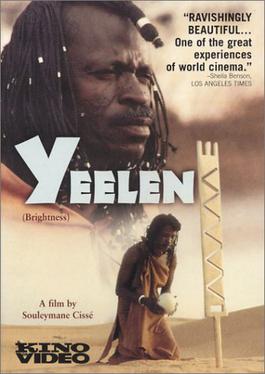
Yeelen put Malian cinema on the map as the film from the country to go to the international film festivals. The director, Souleymane Cissé, a Malian director who trained in France and thus had the knowhow and the resources to submit the film and attain international acclaim. Unfortunately, because of the nudity in the film, Issiaka faced very hard times after the film's return to Mali, and although he continues to act, and is well recognized, he has had difficulties confronting his family about it. Since, Issiaka has starred in roughly 17 films, though Yeelen was his first. Issiaka was discovered while dancing with our host, Sedou Coulibaly, and picked because of his authentic Bamana look. He had never acted before, and the director had been looking for 2 years for someone to play his lead. The film took 7 years to make after extensive research and living among authentic Bamana villages.
While there are a few acclaimed Malian films, Malian cinema has pretty much seen its peak, and is on the decline (if not extinct), according to Issiaka, since past presidents have feared the power of artists and shut down many of the film houses and made acting a considerably difficult profession.
Wednesday, August 11, 2010
Tubabu!
My favorite part about Mali so far is the hospitality. Everyone here is very nice and when I see people in the street they will look me in the eye and ask "ca va?" or say "i ni ce," the most common greetings. Now that my bamara is getting better I can get a little farther, asking how they slept, how their family is, how their parents/kids are, and people are very happy to speak and impressed that I can say even that much.
Going out on the street, it's hard to walk anywhere without a posse of kids following you, wanting to hold your hand and drink your water. If they're shy sometimes they'll just stare but it's not rude, it's just weird to see a foreigner in such a small part of town. When we go out, the kids will yell "Tubabu!" which means foreigner, or white person, but it's not mean, it's the invitation to a game! If you yell back "Farafin," which essentially means you are black, they'll start chanting "Tubabu, tubabu, farafin, farafin" until you get too far away. Or they'll try to practice their French, and even some times English on you! It's a real treat and whenever I'm too sore from dancing I'll just take a stroll around the streets and that immediately wakes me up!
That's all for a bit. K'an Ben!
Going out on the street, it's hard to walk anywhere without a posse of kids following you, wanting to hold your hand and drink your water. If they're shy sometimes they'll just stare but it's not rude, it's just weird to see a foreigner in such a small part of town. When we go out, the kids will yell "Tubabu!" which means foreigner, or white person, but it's not mean, it's the invitation to a game! If you yell back "Farafin," which essentially means you are black, they'll start chanting "Tubabu, tubabu, farafin, farafin" until you get too far away. Or they'll try to practice their French, and even some times English on you! It's a real treat and whenever I'm too sore from dancing I'll just take a stroll around the streets and that immediately wakes me up!
That's all for a bit. K'an Ben!
Dance Class
We get our butts handed to us on a regular basis by two beautiful and talented dancers, Sali and M'ba (check out the Les Prof page for pictures), who taught us 2 very different dances. Sali taught us the beginning of Dununba(my favorite already), which means big drum. The Dunun, or doun doun, is a pretty big drum anyway, but add a “ba” at the end of anything and that makes it bigger. Dununba has been danced by Malinke people for centuries and is a powerful masculine dance involved in a ceremony where mean wear heavy discs on their arms with blades on the end and slash at each other until one man is standing and the rest are left bleeding and crying on the side. We didn’t use the blades, but you can imagine....
I'm already in love with Sali. For one, her dances are more masculine, and she has the brightest spirit, despite a pretty tough life. Here's a video of her dancing Dansa. Oh my god...
Mba taught us the beginning of Sungurubanin. Sunguru means girlfriend. Add the ba and you get.. (remember? Yes!) big girlfriend, or whore, but then add nin which makes things little, and you get the little whore dance! This is much more feminine and expressive. We danced for about 2 hours, which was intense, and then gorged on fried fish and Tegedegana (sp?), a delicious peanut butter stew over rice, and plantains! That Nafi Coulibaly is some cook...
I'm already in love with Sali. For one, her dances are more masculine, and she has the brightest spirit, despite a pretty tough life. Here's a video of her dancing Dansa. Oh my god...
Mba taught us the beginning of Sungurubanin. Sunguru means girlfriend. Add the ba and you get.. (remember? Yes!) big girlfriend, or whore, but then add nin which makes things little, and you get the little whore dance! This is much more feminine and expressive. We danced for about 2 hours, which was intense, and then gorged on fried fish and Tegedegana (sp?), a delicious peanut butter stew over rice, and plantains! That Nafi Coulibaly is some cook...
Ne Togo Yakuba Coulibaly!
Today was our first day of classes, starting bright and early with Seykou Camara teaching us Bamanankan, or Bamana, the local language. French is the national language of Mali because, despite being independent for 50 yrs, enough people know it that it allows for communication between different ethnic groups. Bamanankan is the language spoken in Bamako and by many Bamara people, but is not spoken as universally outside the capital. Seykou tells us it’s soon to be a national language though. As far as I can tell Bamana is short for Bamanankan, but Bamara can be used to describe the language or the people... It’s a little confusing. So, after our first lesson in Bamana, here’s what we learned:
Good morning - I ni sogoma
Good day - I ni tile
Good afternoon - I ni wula
Good evening - I ni su
See the pattern? “I” is pronounced like the i in "bit” and imagine an accent over the “e” in “tile” to get the right pronunciation. Translated literally it means “you and (the time of day)”. Men respond with “N'ba” which means “I am big,” and women say “N'se” which means “I have power.” This is what you respond with after “I ni ce” too, which means thank you.
To ask someone their name you say “I togo?” and the response is “ne togo....” Usually the first name is given, and then they say back “I jamu?” and you respond “ne jamu...,” which is when you give your last name. After the lesson, Seykou gave us all “Bamana togo,”or Malian names, and I was named Yakouba, a very strong name, and the name of my host’s father. Since I’m staying with the Coulibalys, my last name is Coulibaly, so “Ne togo Yakouba Coulibaly!” I am very proud of this name as it was given to me by our dance and drumming teachers, and Seykou, a distinguished academic who speaks Bamana, French, and English. Finally, if someone calls your name or if you’re in a conversation and agree with someone you can say “Namu” which means “I hear you,”so if you get caught in a conversation with someone speaking Bamana (a common social snafu), you can talk for hours by letting the other person speak and responding with “Namu, namu, namu...”
That’s Bamana 101! Let me know if you want to hear more Bamana phrases...
An ka taa!
(Let’s go)
Good morning - I ni sogoma
Good day - I ni tile
Good afternoon - I ni wula
Good evening - I ni su
See the pattern? “I” is pronounced like the i in "bit” and imagine an accent over the “e” in “tile” to get the right pronunciation. Translated literally it means “you and (the time of day)”. Men respond with “N'ba” which means “I am big,” and women say “N'se” which means “I have power.” This is what you respond with after “I ni ce” too, which means thank you.
To ask someone their name you say “I togo?” and the response is “ne togo....” Usually the first name is given, and then they say back “I jamu?” and you respond “ne jamu...,” which is when you give your last name. After the lesson, Seykou gave us all “Bamana togo,”or Malian names, and I was named Yakouba, a very strong name, and the name of my host’s father. Since I’m staying with the Coulibalys, my last name is Coulibaly, so “Ne togo Yakouba Coulibaly!” I am very proud of this name as it was given to me by our dance and drumming teachers, and Seykou, a distinguished academic who speaks Bamana, French, and English. Finally, if someone calls your name or if you’re in a conversation and agree with someone you can say “Namu” which means “I hear you,”so if you get caught in a conversation with someone speaking Bamana (a common social snafu), you can talk for hours by letting the other person speak and responding with “Namu, namu, namu...”
That’s Bamana 101! Let me know if you want to hear more Bamana phrases...
An ka taa!
(Let’s go)
Sunday's wedding day!
Sundays are wedding days in Bamako and since Ramadan is coming on soon, weddings will stop in respect of local practices, so we had to get in on them ASAP. We missed the ceremony, but that’s fine. We got there just in time for the best part: the reception. Mostly filled with women and children, the wife of the bride and her friends were passing out gifts, and dancing along to the singers. I couldn’t understand the words, but a song would start sort of slow, and women would dance around in a circle, copying each others’ footwork. Then the song would unexpectedly pick up pace, and a few women would step up to show off their moves, the song would end, and it would start over again!
Here's a view of the reception tent from the approach. It's not much but the music is bumpin and the people are grindin.


Here's a view of the reception tent from the approach. It's not much but the music is bumpin and the people are grindin.

Here's a picture of all the beautifully dressed women. They all had individualized tailored dresses, not uncommon and would laugh at us when we got up to dance.

Home away from home!
Welcome to the Yeredon Center, our home away from home for the next couple weeks. Today we got to pick our own rooms, unpack a little, and then it was off to a wedding! But first, here’s a picture of my new room:
 My new room
We don't have internet at the house so I'll reserve the time it takes to load pictures to more important posts about what we're doing. All of the halls and the dining room are covered in beautiful paintings and maps. The hallways and balconies have pictures of different day to day African life, as well as important people in Malian history (ATT, Moussa Traore), and friends and family of the Coulibalys. Right now, someone’s painting picture of Seydou right by the front door. I think it might be Amadou...

We don't have internet at the house so I'll reserve the time it takes to load pictures to more important posts about what we're doing. All of the halls and the dining room are covered in beautiful paintings and maps. The hallways and balconies have pictures of different day to day African life, as well as important people in Malian history (ATT, Moussa Traore), and friends and family of the Coulibalys. Right now, someone’s painting picture of Seydou right by the front door. I think it might be Amadou...

Bienvenue a Mali!
We made it! We landed in Bamako at about 12:40am on Sunday, August 8th, and flew through customs, which is unusual for this airport (especially since I didn’t have my yellow fever certificate). We were greeted by Seydou and Djibi, Michelle’s husband and nephew, threw our stuff on the roof of a Bashe (big ol' vanbus), and got to the Yeredon center around 3am. Exhausted and sweaty we crashed and got to sleep until 3pm, just because we were so exhausted.
Saturday, August 7, 2010
Bus to Africa, with a layover in HELL
Worst travel experience of my life, sorry Megabus. I usually love the reliably cheap double decker bus with wifi and outlets for charging your laptop, but when the bus driver is forging documents which results in a 4 HOUR DELAY, not so much. Here's my day:
8:30 Leave for the bus station w/ plenty of time to explain why I have 2 tickets for all my stuff
9:30 Bus departs on schedule. I pop in How to Train your Dragon and enjoy the soon-to-be classic.
11:30 We're pulled over at a weigh station for an hour and a half with no explanation. Rumors circulate that the bus is too heavy (?) and that we're going somewhere else to meet another bus which will take us to NY.
1:00 I contemplate getting in a cab and taking it to Hartford (yes, we're still not past Hartford at this point) to get in a car that will go straight to the airport, which in retrospect, would have been much less stressful. Soon, however, a kindly bus driver named Ernie takes over and says our first driver had forged some documents and had to be let go! Shady stuff...
1:45 we arrive in Farmington, CT, where we get yet another bus driver named Clive
 Not quite...
5:45!!! Our bus finally gets into 27th and 7th ave, where I have to get on a subway (7 blocks away with 150 lbs of luggage) to take me to JFK. Total time on that @%($&#@ing bus: 8.25 hours! Not cool Megabus.
7:00 I arrive at JFK, an hour before departure.
Luckily after that it's been pretty smooth sailing. We have about a 15 hour layover in Casablanca so the airline puts us up in a hotel! It's not even an overnight. Not on American I'll tell you that...

 Chillin' at the airport The big market place
Anywho, we should be getting into Bamako sometime around 12:40am tonight, and according to Michelle, Sunday is wedding day in the summer, and crashing is encouraged! Wilson/Vaughn style.
Bon Voyage!
8:30 Leave for the bus station w/ plenty of time to explain why I have 2 tickets for all my stuff
9:30 Bus departs on schedule. I pop in How to Train your Dragon and enjoy the soon-to-be classic.
11:30 We're pulled over at a weigh station for an hour and a half with no explanation. Rumors circulate that the bus is too heavy (?) and that we're going somewhere else to meet another bus which will take us to NY.
1:00 I contemplate getting in a cab and taking it to Hartford (yes, we're still not past Hartford at this point) to get in a car that will go straight to the airport, which in retrospect, would have been much less stressful. Soon, however, a kindly bus driver named Ernie takes over and says our first driver had forged some documents and had to be let go! Shady stuff...
1:45 we arrive in Farmington, CT, where we get yet another bus driver named Clive

5:45!!! Our bus finally gets into 27th and 7th ave, where I have to get on a subway (7 blocks away with 150 lbs of luggage) to take me to JFK. Total time on that @%($&#@ing bus: 8.25 hours! Not cool Megabus.
7:00 I arrive at JFK, an hour before departure.
Luckily after that it's been pretty smooth sailing. We have about a 15 hour layover in Casablanca so the airline puts us up in a hotel! It's not even an overnight. Not on American I'll tell you that...

 Chillin' at the airport The big market place
 Anywho, we should be getting into Bamako sometime around 12:40am tonight, and according to Michelle, Sunday is wedding day in the summer, and crashing is encouraged! Wilson/Vaughn style.
Bon Voyage!
Thursday, August 5, 2010
Full day of packing!
Tomorrow's the day!
I'm leaving Boston at 9:30am in order to make an 8pm flight out of NY. Seems a little excessively safe, huh? Better safe than not on a flight to Mali, however. So today was the fun day of packing! 3 loads of laundry, 2 trips out of the house, and a nervous breakdown later here's what I got:

1. One (hopefully) less than 50 lb bag
2. Another (hopefully, but almost definitely not) less than 50 lb bag
3. Personal backpack that probably weighs 50 lbs
4. Extra clothes for someone to hopefully stuff in their suticase
5. Football that I will probably have to carry all the way to Africa since it doesn't fit in any other bag
Bag 1. is full of clothes from the clothing drive we did at Brown, and bag 2 is half full of gifts for Malians. I have no idea if I packed enough clothes for the trip. Probably didn't. Oh well. Got my passport and my visa, my yellow fever certificate, various drugs for various ailments, different recording devices, and the carrying capacity of two bus tickets. Sitting back now and relaxing to some soothing True Blood.
SPOILER ALERT!!!!
(Sookie's dead)

I'm leaving Boston at 9:30am in order to make an 8pm flight out of NY. Seems a little excessively safe, huh? Better safe than not on a flight to Mali, however. So today was the fun day of packing! 3 loads of laundry, 2 trips out of the house, and a nervous breakdown later here's what I got:

1. One (hopefully) less than 50 lb bag
2. Another (hopefully, but almost definitely not) less than 50 lb bag
3. Personal backpack that probably weighs 50 lbs
4. Extra clothes for someone to hopefully stuff in their suticase
5. Football that I will probably have to carry all the way to Africa since it doesn't fit in any other bag
Bag 1. is full of clothes from the clothing drive we did at Brown, and bag 2 is half full of gifts for Malians. I have no idea if I packed enough clothes for the trip. Probably didn't. Oh well. Got my passport and my visa, my yellow fever certificate, various drugs for various ailments, different recording devices, and the carrying capacity of two bus tickets. Sitting back now and relaxing to some soothing True Blood.
SPOILER ALERT!!!!
(Sookie's dead)

Wednesday, August 4, 2010
Mali, eh?
I was surprised at the amount of people that, when told I was going to Mali, responded with either, "oh, I hear Bali is lovely this time of year!" or, "Mali? I'm afraid I don't know what that is..." A little surprising since it's twice the size of Texas and one of the poorest nations in the world. But, nonetheless, as a relatively new country who only declared independence in 1960, Mali is not as in-the-news as other African countries who unfortunately have more recently experienced nationally tragedies, so here's a little info.
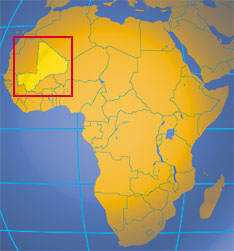
Mali is a landlocked country located in Western Africa which borders 7 different nations and is comprised of a variety of climates and terrains, most notably the Sahara.
HISTORY (abridged)
Malians declared independence from the French in 1960, but before that experienced a history of epic proportions, full of culture and turmoil, which has led to the saying a "poor country with rich people." The first legend to emerge from Mali Round 1230 was Soundiata Keita, who, despite being born without the use of his legs, was prophesied to be the greatest king in the world. After miraculously recovering the use of his legs, he went on to defeat Soumangourou Kante and unite the Malinke chiefs in the area under the first Mali Empire. Over the years modern day Mali had a variety of different ruling bodies including the Songhay Empire, the Moroccans, the Tukulor Empire, and the French. In 1960, Modibo Keita led his country to independence from the French with an alliance with Senegal. After Senegal withdrew from the Federation, Modibo Keita was elected its frist president, and went on to create a national, unconvertible currency, the Mali Franc, which had disastrous effects on Mali's economy. After Moussa Traore led a bloodless coup d'etat, the Comite Militaire de Liberation Nationale was established to resotre the economy before returning it to civilian rule, frustrated by a devastating drought from 1968 to 1974. Civilian unrest and student protests led to another coup, a transitional government, and a new constitution, and in 1992, Alpha Oumar Konare was elected the first democratic president. In 2002, he was succeeded by Amadou Toumani Toure who ran a campaign outside of any political party and won the presidency with a 68% majority vote. Today, Mali is one of the most politically stable countries in Africa.
CULTURE
Despite being one of the poorest nations in terms of GDP, Mali is considered to be rich in social capital. Social capital relates to cultural, spiritual, and human values, where interaction between people is more important than individual wealth. Based on mutual respect and interdependence, relations between different ethnic groups, is quite strong. Griots, or artisans, are not a high caste, but are nationally respected as the nation's keepers of its rich oral history. Through music and dance they retell stories of great warriors , chiefs, villains, and comedians who have made their country one of the most colorful in the world. There are two basic styles of music, Mande and Malinke , which are widely practiced, and many incorporate many native instruments, such as the kora, ngoni - string instruments - and the joun joun, and djembe, traditional African drums. Women are traditionally the story tellers and dancers, while men accompany them, though these gender roles are starting to blur.
Please be advised that this is a BRIEF summation of what I've been reading in travel books and online, and as someone who's never been to Mali I'm sure I'm missing some very crucial details. Please take a look at the Wikipedia article for Mali to learn more, and I'll be filling in more of the gaps as my travels educate me! Hope this helps, and stay tuned for a closer look at Mali's fascinating people.
Tuesday, August 3, 2010
Counting Down the DAYS!
“Music expresses that which cannot be put into words and cannot remain silent.”
-Victor Hugo
I truly believe that music brings people to together. Not only this, but I am confident that music and art are invaluable tools in achieving critical dialogue, reflection, and communication in our global pursuit of a fuller humanity. During my time at Brown and my visit to Mali last summer, I have grown very passionate about education as the practice of freedom as well as the power of performance to engage in critical pedagogy globally. This summer, I will be returning to Bamako, Mali to the village of Djoumanzana to work with youth at the Djoumanzana Children’s Center, a struggling institution with one classroom managed by two of the most selfless, passionate, and generous educators I’ve been privileged to meet. The Children’s Center is an informal organization sponsored by various NGO’s in Mali. While the resources for the center are beyond minimal, the children of the village utilize the center as a safe place to learn and play, immersed in the performative culture which dances through the streets throughout every moment of every day. Through this tremendous opportunity for community engagement among the youth at the community center and in the streets, I'm excited to facilitate “problem-posing” and “socially liberating” activities and projects in the performing arts to create works of art and participate in transnational collaboration.


-Victor Hugo
I truly believe that music brings people to together. Not only this, but I am confident that music and art are invaluable tools in achieving critical dialogue, reflection, and communication in our global pursuit of a fuller humanity. During my time at Brown and my visit to Mali last summer, I have grown very passionate about education as the practice of freedom as well as the power of performance to engage in critical pedagogy globally. This summer, I will be returning to Bamako, Mali to the village of Djoumanzana to work with youth at the Djoumanzana Children’s Center, a struggling institution with one classroom managed by two of the most selfless, passionate, and generous educators I’ve been privileged to meet. The Children’s Center is an informal organization sponsored by various NGO’s in Mali. While the resources for the center are beyond minimal, the children of the village utilize the center as a safe place to learn and play, immersed in the performative culture which dances through the streets throughout every moment of every day. Through this tremendous opportunity for community engagement among the youth at the community center and in the streets, I'm excited to facilitate “problem-posing” and “socially liberating” activities and projects in the performing arts to create works of art and participate in transnational collaboration.


Monday, August 2, 2010
Sophie's Blog
Hi-O!
For those of you CAN'T WAIT to get to Mali with us, check out Sophie Shackleton's blog. Sophie graduated '09 and has been living in Bamako since April working with a local NGO finding employment for youth in the area. She's got some great pictures on there and had the foresight to use tumblr to host her blog so she could have cool slideshows. Oh well... maybe we'll set up a tumblr site so you guys can have a one stop shop for pictures from the trip. BUT WHAT ABOUT VIDEOS?!? A-ha! We will certainly have those.
For those of you CAN'T WAIT to get to Mali with us, check out Sophie Shackleton's blog. Sophie graduated '09 and has been living in Bamako since April working with a local NGO finding employment for youth in the area. She's got some great pictures on there and had the foresight to use tumblr to host her blog so she could have cool slideshows. Oh well... maybe we'll set up a tumblr site so you guys can have a one stop shop for pictures from the trip. BUT WHAT ABOUT VIDEOS?!? A-ha! We will certainly have those.
Sunday, August 1, 2010
Mande/New Works
One way people, including myself, get to learn about true Malian traditions, or maybe hear about Mali for the first time (seriously-post to follow), is through Michelle Bach-Coulibaly's work at Brown University. Through her New Works/World Traditions troupe and the Mande dance class, Brown students can learn about African traditions and world issues they otherwise may not be exposed to. Mande dance class is the reason many people chose to go to Mali to experience this vibrant culture first hand, so I thought I'd take a post to explain these two entities.
MANDE DANCE: Offered in the Spring every year, over 100 students learn dances taught by Bach-Coulibaly from the Mande tradition. These dances range from spiritual ceremonies to dances inspired by everyday work habits, such as fishing, and require little inhibitions and a low center of gravity (free your pelvis, free your mind!). This year we learned 3 dances - Somonodon/Bozodon, Sounou, and Tonsole/Kote - with any where from 10 to 16 steps. Accompanied by Seydou Coulibaly on the joun joun and Isa Coulibaly on the Jembe, we dance in groups towards the drummers, which command a high amount of respect in Malian culture. We're also split up into families named after renowned artistic families in Mali like the Coulibaly's and Kouyates! Together with our families we raise money and awareness for different causes around the globe. Mande is certainly many people's inspiration for traveling to Mali, and certainly mine. Take a look at the Kouyate family doing Somonodon rocking some crazy colors!
NEW WORKS/WORLD TRADITIONS: New Works/World Traditions is a dance troupe led by Professor Coulibaly that specializes in "honoring Mande Traditions in light of their influence upon other Old World Traditions, and New Performance Arts in and out of Africa." Each year they participate in many world cultural events and competitions, provide TAs for the Mande dance class, and create original pieces each year for the Spring Dance Festival. This year they performed a moving piece written by Professor Bach-Coulibaly and Grisselle Escotto that portrayed the story of Debra Green, a Katrina Victim in Road Home. Their work is a mixture of dancing, singing, acting, often includes live instrumentation, and specializes in telling powerful stories through performance.
MANDE DANCE: Offered in the Spring every year, over 100 students learn dances taught by Bach-Coulibaly from the Mande tradition. These dances range from spiritual ceremonies to dances inspired by everyday work habits, such as fishing, and require little inhibitions and a low center of gravity (free your pelvis, free your mind!). This year we learned 3 dances - Somonodon/Bozodon, Sounou, and Tonsole/Kote - with any where from 10 to 16 steps. Accompanied by Seydou Coulibaly on the joun joun and Isa Coulibaly on the Jembe, we dance in groups towards the drummers, which command a high amount of respect in Malian culture. We're also split up into families named after renowned artistic families in Mali like the Coulibaly's and Kouyates! Together with our families we raise money and awareness for different causes around the globe. Mande is certainly many people's inspiration for traveling to Mali, and certainly mine. Take a look at the Kouyate family doing Somonodon rocking some crazy colors!
NEW WORKS/WORLD TRADITIONS: New Works/World Traditions is a dance troupe led by Professor Coulibaly that specializes in "honoring Mande Traditions in light of their influence upon other Old World Traditions, and New Performance Arts in and out of Africa." Each year they participate in many world cultural events and competitions, provide TAs for the Mande dance class, and create original pieces each year for the Spring Dance Festival. This year they performed a moving piece written by Professor Bach-Coulibaly and Grisselle Escotto that portrayed the story of Debra Green, a Katrina Victim in Road Home. Their work is a mixture of dancing, singing, acting, often includes live instrumentation, and specializes in telling powerful stories through performance.
First Post!
Welcome to the Brown University Mali Adventure Blog!
My name's Rob, I'll be your captain for this blogging experience! Every year, Michelle Bach-Coulibaly, Senior Lecturer in Theater, Speach, and Dance, takes a group of students to the Yeredon Arts Center in Bamako, Mali, to partake in a cultural immersion project. We will be singing, dancing and learning new instruments directly from nationally and internationally renowned Malian artists, as well as partaking in service learning projects in the area. We'll be traveling to remote villages, hiking in the Dogon region, and seeing if our stomachs can measure up to the local cuisine.
Stay tuned to this blog to learn more about:
- Michelle, her husband Seydou, and and the other Yeredon staff members/local artists
- Past trips to the Yeredon Arts Center
- Each of the participants of this year's program
- More about Mali in general
- Video blogs (vlogs, as the kids say) of our professors and experiences
- and most importantly, daily posts of our travels (internet allowing)!
We'll be taking off August 6th from JFK airport in NYC, and arriving in Bamako on the 8th with a layover in Casablanca, so make sure to follow us, add us to your google reader, tell us what you'd like to hear more of, and get excited for some fun-filled adventures the whole family can enjoy!
-Rob
My name's Rob, I'll be your captain for this blogging experience! Every year, Michelle Bach-Coulibaly, Senior Lecturer in Theater, Speach, and Dance, takes a group of students to the Yeredon Arts Center in Bamako, Mali, to partake in a cultural immersion project. We will be singing, dancing and learning new instruments directly from nationally and internationally renowned Malian artists, as well as partaking in service learning projects in the area. We'll be traveling to remote villages, hiking in the Dogon region, and seeing if our stomachs can measure up to the local cuisine.
Stay tuned to this blog to learn more about:
- Michelle, her husband Seydou, and and the other Yeredon staff members/local artists
- Past trips to the Yeredon Arts Center
- Each of the participants of this year's program
- More about Mali in general
- Video blogs (vlogs, as the kids say) of our professors and experiences
- and most importantly, daily posts of our travels (internet allowing)!
We'll be taking off August 6th from JFK airport in NYC, and arriving in Bamako on the 8th with a layover in Casablanca, so make sure to follow us, add us to your google reader, tell us what you'd like to hear more of, and get excited for some fun-filled adventures the whole family can enjoy!
-Rob
Subscribe to:
Comments (Atom)
